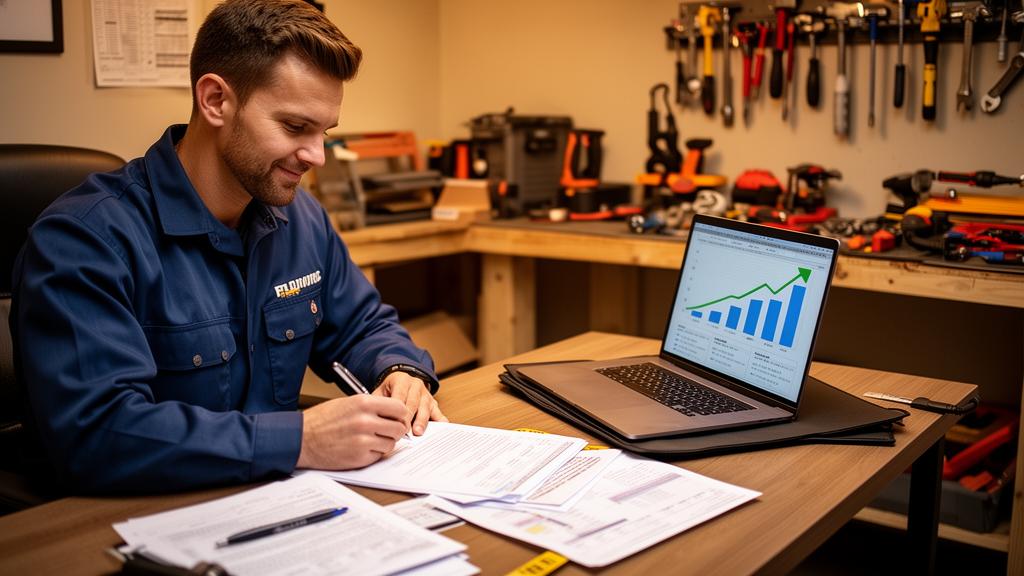
You've got your backflow tester certification and you're ready to go out on your own. The good news: backflow testing is one of the most accessible plumbing specialties to build a business around. Low overhead, recurring revenue, and legally mandated demand. The bad news: most new testers underestimate the business side — and technical skill alone won't pay the bills. Here's a realistic roadmap for your first year.
Months 1–2: Foundation
Before you test your first device, get the business fundamentals right. Skipping this step creates problems that compound quickly.
Business Formation
- Business entity: Form an LLC at minimum. It separates personal assets from business liability — critical when you're signing off on public health compliance documents
- EIN and bank account: Get a federal EIN and open a dedicated business checking account. Never co-mingle personal and business funds
- Insurance: General liability ($1M minimum), professional liability/E&O insurance, and commercial auto. Most commercial clients and water utilities require proof of insurance before you can test on their properties
- Licensing: Verify your state and local business license requirements. Some cities require a separate plumber's license or contractor registration in addition to your backflow certification
Equipment Investment
Your startup equipment budget should be $2,500–$4,500 for essential gear:
- Test kit: $1,200–$2,000 for a quality differential pressure test kit (Mid-West 845, TK-99E, or equivalent)
- Gauge calibration: $75–$150 immediately after purchase to establish a documented baseline
- Hoses and fittings: $200–$400 for a complete set of adapters, hoses, and test cock fittings
- Hand tools: $200–$300 for wrenches, pliers, screwdrivers, and specialty tools
- Safety gear: $100–$200 for PPE (gloves, eye protection, knee pads, high-vis vest)
- Digital tools: $0–$50/month for report generation and submission software
Months 2–4: First Clients
Your first 10 clients will come from personal network and direct outreach. Don't waste money on advertising yet.
Where to Find Your First Tests
- Existing plumber contacts: General plumbers who don't do backflow testing are your best referral source. Offer them a per-test referral fee ($10–$25)
- Property management companies: Walk in with your certification, insurance certificate, and a one-page rate sheet. They always need reliable testers
- Water utility lists: Some utilities maintain lists of properties due for testing. Ask the cross-connection control department if they share this data
- Commercial real estate: Office parks, strip malls, and shopping centers all have backflow devices that need annual testing
Pricing Your First Year
Don't underprice to get volume. Research your local market rate (typically $75–$175 per device for standard testing) and price competitively but not cheaply. Low prices attract low-value clients and signal inexperience.
- Standard residential test: $75–$125
- Standard commercial test: $100–$175
- Multi-device discount: 10–15% per device after the first
- Emergency/same-day: 25–50% surcharge
Months 4–8: Building Systems
Once you're doing regular tests, systematize everything. The testers who scale are the ones who stop doing everything manually.
Essential Business Systems
- Digital reporting: Stop handwriting reports. Use software that generates professional PDFs and handles city submission automatically. This alone saves 30–45 minutes per test
- Client database: Track every client, device, and test date. Set up automatic reminders so clients hear from you 30 days before their annual test is due
- Invoicing: Send invoices the same day you test. Net-30 terms for commercial clients, payment on completion for residential. Chase late invoices at 7, 14, and 30 days
- Route optimization: Group tests geographically. Driving between scattered jobs kills profitability — aim for 6–10 tests per day in a tight area
Tools like FlowCert handle reporting, submission, and client management in one platform — designed specifically for backflow testers.
Months 8–12: Growth and Profitability
By month 8, you should have recurring clients and a predictable testing schedule. Now focus on growth.
Revenue Milestones
Realistic year-one revenue targets for a solo backflow tester working full-time:
- Conservative (4–6 tests/day): $60,000–$90,000 gross revenue
- Moderate (6–8 tests/day): $90,000–$130,000 gross revenue
- Aggressive (8–12 tests/day): $130,000–$180,000 gross revenue
After expenses (insurance, fuel, equipment, software, phone), expect net margins of 55–70% as a solo operator.
Scaling Decisions
At the end of year one, you'll face a decision: stay solo and maximize your personal income, or hire your first technician and start building a company. Both are valid paths — but they require very different mindsets.
For hiring guidance, see our guide to hiring and managing technicians.
Common Year-One Mistakes
Learn from the mistakes other new testers have made so you don't repeat them.
Mistakes to Avoid
- Underpricing: Racing to the bottom on price attracts clients who don't value your work and makes it impossible to grow
- No insurance: One liability claim without coverage can end your business permanently
- Handwritten reports: They look unprofessional, create errors, and can't be submitted digitally to cities that require it
- Ignoring the business side: You're not just a tester — you're a business owner. Track expenses, save for taxes, and invest in marketing
- Not collecting emails: Every client interaction is a chance to build your contact list for automated renewal reminders
Conclusion
Building a backflow testing business is straightforward but not easy. The demand is guaranteed by law, the barriers to entry are moderate, and the recurring nature of annual testing creates predictable revenue. Execute the fundamentals — certification, insurance, professional tools, and consistent client service — and year one can set the foundation for a thriving long-term business.
Frequently Asked Questions
How much does it cost to start a backflow testing business?
Budget $5,000–$10,000 for a complete startup: test equipment ($2,000–$3,500), insurance ($1,500–$3,000/year), business formation ($200–$500), initial marketing ($500–$1,000), and miscellaneous supplies. You can start with a reliable personal vehicle and add a dedicated work truck later.
How long until I'm profitable?
Most solo testers reach profitability within 2–3 months of active testing. Your fixed costs are low (insurance, software, phone) and your per-test revenue is high. If you can do 4+ tests per day at $100+ each, you're profitable almost immediately after covering monthly fixed costs.
Do I need to be a licensed plumber to start?
Requirements vary by state. Some states (like Texas) require only a backflow prevention assembly tester (BPAT) certification. Others require an active plumber's or journeyman license as a prerequisite for backflow certification. Check your state's specific licensing board requirements before investing in certification classes.