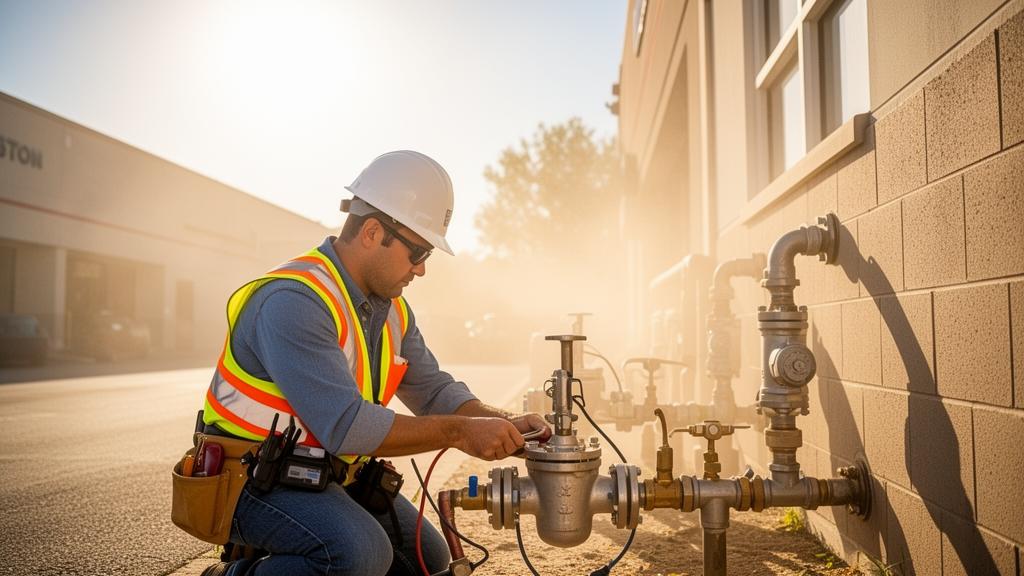
Compliance deadlines don't care about the weather. Whether it's 110°F in Phoenix or 15°F in Denver, backflow testers are expected to show up, get accurate readings, and submit reports on time. But extreme weather creates real risks — to your health, your equipment accuracy, and the validity of your test results. Here's how experienced testers handle the worst conditions safely.
Testing in Extreme Heat
Heat-related illness is the most underestimated occupational hazard for outdoor service workers, and backflow testers spend hours crouched next to hot valve boxes in direct sun.
Personal Safety Measures
- Hydration schedule: Drink 8 oz of water every 15–20 minutes, not just when thirsty. By the time you feel thirst, you're already dehydrated
- Schedule strategically: Book outdoor tests before 10 AM or after 4 PM during summer months. Use midday for indoor tests or office work
- Cooling gear: Invest in evaporative cooling vests, wide-brim hats, and UV-protective clothing. Wet bandanas around the neck make a measurable difference
- Know the signs: Dizziness, nausea, confusion, or stopped sweating are medical emergencies. Stop testing immediately and seek shade and fluids
Equipment Accuracy in Heat
High temperatures affect gauge accuracy. Differential pressure gauges can drift when exposed to temperatures above 120°F — common inside metal valve boxes in direct sun.
- Store gauges in an insulated bag between tests, not on a hot truck dashboard
- Allow gauges to equilibrate to ambient temperature for 2–3 minutes before reading
- If a valve box is too hot to touch, let it cool briefly before inserting equipment
- Check your zero reading more frequently on extreme heat days — drift is real
Testing in Freezing Conditions
Cold weather creates a different set of challenges: frozen components, brittle fittings, and the risk of cracking a device during testing.
Pre-Test Cold Weather Checks
- Inspect for ice: Never force a frozen shutoff valve. Apply gentle heat (heat gun on low, warm towels) to thaw components before operating
- Check for frost damage: Look for cracks in the body, relief valve port blockage from ice, and frozen drain lines before connecting your gauge
- Insulate exposed test cocks: Brass test cocks can crack in freezing temps. If you see frost heave around the vault, proceed with caution
Protecting Your Equipment
- Keep test kits in an insulated case inside the cab, not in the truck bed
- Drain hoses completely after each test — water in hoses freezes and cracks fittings
- Use silicone-based lubricant on test cock threads instead of water-based alternatives
- Carry spare hose washers — cold rubber becomes brittle and fails at connections
Post-Flood Testing Protocols
After flooding events, water utilities often mandate emergency retesting of all backflow devices in affected areas. These tests carry unique risks.
Contamination Hazards
Floodwater carries sewage, chemicals, petroleum, and biological contaminants. Any backflow device submerged in floodwater should be treated as potentially contaminated.
- Wear nitrile gloves and eye protection when handling flood-exposed devices
- Do not use your mouth to clear test hoses — use a pump or compressed air
- Decontaminate your test kit and hoses with a 10% bleach solution after flood-area testing
- Document the flood exposure in your report notes — utilities need this for their records
Post-Flood Device Concerns
Silt, debris, and sediment can lodge in check valves and relief valve ports, causing false failures. Before condemning a device, flush it thoroughly and retest. Many "failed" post-flood devices pass after proper flushing.
Weather-Related Documentation
Smart testers document weather conditions in their reports. If a test result seems marginal, a note about ambient temperature or recent flooding provides context for the reviewing utility.
What to Document
- Ambient temperature at time of test
- Whether the device was exposed to flooding or freeze conditions
- Any unusual observations (ice damage, silt in ports, heat-related gauge concerns)
- Whether you flushed the device before testing due to debris
For more on report documentation, see our guide on what every test report must include.
Conclusion
Extreme weather is part of the job. The testers who thrive in all conditions are the ones who plan ahead, protect their equipment, and never compromise on safety. Your clients depend on you to show up — but they need you healthy and producing accurate results, not pushing through dangerous conditions.
Frequently Asked Questions
Can I refuse to test in extreme weather?
Yes. OSHA heat standards and your own safety judgment take priority. Communicate proactively with clients — reschedule for a safer time and explain why. Most clients appreciate a tester who prioritizes quality over speed.
Do extreme temperatures affect test results?
Yes. Cold can increase differential pressure readings slightly, and heat can cause gauge drift. The effect is usually within tolerance, but be aware of it and verify your zero more frequently in extreme conditions.
Should I charge more for extreme weather testing?
Many testers add a surcharge for emergency post-flood retesting or hazardous conditions. Build this into your service agreement upfront so clients aren't surprised. Emergency rates 25–50% above standard are common in the industry.