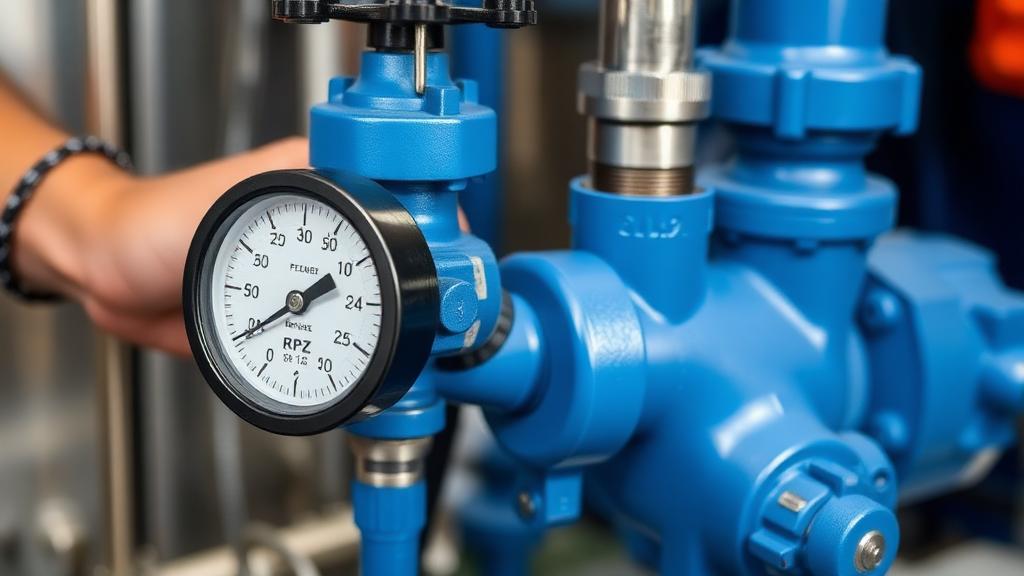
Every time you turn on a faucet, you expect clean, safe drinking water. But without proper backflow prevention, contaminated water can reverse direction and mix with your potable supply — posing serious health risks to families, employees, and entire communities. Backflow prevention is a critical but often overlooked aspect of plumbing infrastructure that protects public health nationwide. This comprehensive guide explains what backflow is, why it happens, how prevention devices work, and what property owners and plumbing professionals need to know to stay compliant.
What Is Backflow?
Backflow occurs when water flows in the opposite direction than intended in a plumbing system. Instead of moving from the public water supply into your building, water reverses course — pulling potentially contaminated water from your building's plumbing back into the clean water supply. This reversal can introduce pesticides, fertilizers, chemicals, bacteria, and other hazardous substances into the drinking water system that serves your neighbors and community.
Backflow can be caused by two distinct hydraulic conditions:
Backpressure
Backpressure occurs when downstream pressure exceeds supply pressure, forcing water backward. Common causes include:
- Boiler systems — Thermal expansion in heating systems can create pressure exceeding the supply main pressure
- Pump systems — Booster pumps, well pumps, or recirculation pumps can generate pressure higher than the city supply
- Elevated piping — Buildings with plumbing at higher elevations than the supply main create natural backpressure
- Chemical injection systems — Fertilizer injectors, pool chemical feeders, and industrial process pumps
Backsiphonage
Backsiphonage occurs when negative pressure (a vacuum or partial vacuum) develops in the supply line, siphoning water backward from the building into the main. Common causes include:
- Water main breaks — A ruptured main reduces pressure across the distribution system
- Fire hydrant use — High-volume firefighting draws can create negative pressure in nearby service lines
- High-demand periods — Peak usage in industrial areas can temporarily reduce supply pressure
- Water main flushing — Utility maintenance operations can create transient negative pressure
Real-World Contamination Examples
Backflow contamination events happen more often than most people realize. The EPA estimates that approximately 400 reported backflow contamination events occur annually in the United States — and many more go unreported. Notable incidents include:
- 1993 — Gideon, Missouri: A bird roosted in an uncovered water storage tank connected to a system without backflow protection. Salmonella contamination sickened over 600 residents and killed 7 people.
- Residential irrigation cross-connections: Pesticides and fertilizers applied through irrigation systems have been siphoned into drinking water during main breaks, causing illness in multiple states.
- Commercial boiler incidents: Boiler treatment chemicals (including chromates, sulfites, and amines) have backflowed into potable systems when backflow devices failed or were bypassed.
These incidents underscore why every water utility in the country maintains a cross-connection control program and requires backflow prevention devices on at-risk connections.
Types of Backflow Prevention Devices
Different levels of hazard require different levels of protection. Here's how the main device types compare:
| Device Type | Abbreviation | Protection Level | Common Applications | Typical Cost |
|---|---|---|---|---|
| Reduced Pressure Zone Assembly | RPZ / RP | Highest — backpressure & backsiphonage | Chemical systems, medical facilities, industrial | $400-$4,000 |
| Double Check Valve Assembly | DCVA / DC | Moderate — backpressure & backsiphonage | Fire sprinklers, commercial low-hazard | $150-$1,200 |
| Pressure Vacuum Breaker | PVB | Backsiphonage only | Irrigation systems, residential | $50-$300 |
| Spill-Resistant Vacuum Breaker | SVB | Backsiphonage only | Irrigation, similar to PVB | $75-$400 |
| Atmospheric Vacuum Breaker | AVB | Backsiphonage only (non-testable) | Individual fixtures, hose bibbs | $10-$50 |
| Air Gap | AG | Highest — physical separation | Food processing, sewage connections | Varies |
For a detailed comparison of the two most common testable devices, see our RPZ vs. DCVA comparison guide.
Who Needs Backflow Prevention?
Almost every property connected to a public water system needs some form of backflow prevention. Specific requirements are determined by the local water utility based on a cross-connection survey. Properties most likely to require testable backflow devices include:
Commercial Properties
- Restaurants and food service establishments
- Hotels and multi-story buildings
- Car washes
- Laundromats
- Medical and dental offices
- Veterinary clinics
- Manufacturing facilities
Residential Properties
- Homes with in-ground irrigation systems
- Properties with swimming pools connected to the water supply
- Homes with solar heating systems
- Any residence with a booster pump
- Properties with auxiliary water sources (wells, rainwater harvesting)
Institutional Properties
- Schools and universities — see our schools compliance guide
- Hospitals and healthcare facilities — see medical facility requirements
- Government buildings
- Churches with commercial kitchens
Annual Testing Requirements
All testable backflow prevention assemblies (RPZ, DCVA, PVB, SVB) must be tested at least annually by a certified backflow tester. Testing verifies that the device's internal components — check valves, springs, relief valves, and seals — are functioning properly and providing the required level of protection.
The testing process involves:
- Shutting off water to isolate the device
- Connecting a calibrated differential pressure test gauge to the device's test ports
- Systematically testing each component against minimum performance standards
- Recording results on the city's required form
- Submitting the report to the water utility within the required deadline
For details on how often testing is required and what affects the schedule, read our backflow testing frequency guide.
What Happens During a Failed Test
If a backflow device fails its annual test, it must be repaired or replaced and then retested. The property remains out of compliance until passing results are submitted. Depending on the jurisdiction, property owners typically have 14-30 days to complete repairs and retesting. Continued non-compliance can result in fines or water service disconnection.
For detailed information on common failures and repair procedures, see our guide to common backflow test failures.
Cross-Connection Control Programs
Every water utility is required to maintain a cross-connection control program under the Safe Drinking Water Act and state plumbing codes. These programs typically include:
- Cross-connection surveys — Identifying all actual and potential cross-connections on a water system
- Device requirements — Specifying what type of backflow device is required based on hazard level
- Annual testing mandates — Requiring certified testing and report submission
- Enforcement procedures — Penalties for non-compliance, up to and including water service termination
Water utilities maintain databases of every backflow device on their system and track testing compliance. Look up your city's specific cross-connection control requirements →
The Role of Certified Backflow Testers
Backflow testing is a specialized profession requiring specific certification. Testers must:
- Complete an approved training program (typically 32-40 hours)
- Pass written and hands-on practical exams
- Maintain certification through periodic renewal (requirements vary by state)
- Use calibrated test equipment with current calibration certificates
- Follow standardized testing procedures (USC FCCCHR 10th Edition)
For those considering entering the field, see our guide to starting a backflow testing business.
How Technology Is Changing Backflow Testing
The backflow testing industry has traditionally relied on paper forms, fax submissions, and manual record-keeping. Modern technology is transforming every aspect of the workflow:
- Digital test reports — Replace handwritten forms with validated digital data entry, eliminating illegibility and missing fields
- Automated city submission — Reports are submitted electronically to the water utility, reducing turnaround from days to seconds
- Client management — Track all devices, due dates, and client information in one system
- Scheduling optimization — Route optimization and automated reminders maximize efficiency
- Photo documentation — Capture device condition, serial numbers, and site details with timestamped photos
FlowCert is purpose-built for backflow testing professionals — generating city-compliant reports in 30 seconds, automating submissions, and managing your entire client portfolio from your phone. Start free today →
Frequently Asked Questions
What is backflow prevention and why is it important?
Backflow prevention uses mechanical devices installed in plumbing systems to ensure water flows in only one direction — from the clean public supply into your building. Without these devices, contaminated water from irrigation systems, boilers, chemical processes, or other sources can flow backward into the drinking water supply, potentially causing serious illness or death. Every water utility requires backflow prevention on connections that pose a contamination risk.
How do I know if my property needs a backflow preventer?
Your local water utility determines backflow prevention requirements based on a cross-connection survey of your property. Generally, if your property has an irrigation system, fire sprinkler system, boiler, commercial kitchen, or any connection to a non-potable water source, you'll need a backflow prevention device. Contact your water utility or use FlowCert's city lookup to find your local requirements.
How much does backflow prevention testing cost?
Annual backflow testing typically costs $75-$200 per device, depending on your location, the device type and size, and accessibility. Some testers offer volume discounts for properties with multiple devices. This cost is the responsibility of the property owner, not the water utility. See our pricing guide for more details →
What is the difference between a backflow preventer and a check valve?
A simple check valve is a one-way valve that prevents reverse flow, but it's not a testable or approved backflow prevention device. Approved backflow prevention assemblies (like RPZ and DCVA) contain multiple check valves plus additional safety features, test ports for verification, and are designed to meet specific performance standards. Only approved backflow prevention assemblies satisfy water utility requirements.
Can backflow prevention devices be installed underground?
DCVA devices can be installed in underground vaults. However, RPZ devices must be installed above ground because their relief valve must be able to discharge freely — submersion would defeat this safety feature. Local codes specify minimum clearances, drainage requirements, and accessibility standards for all installations. Read our installation guide →