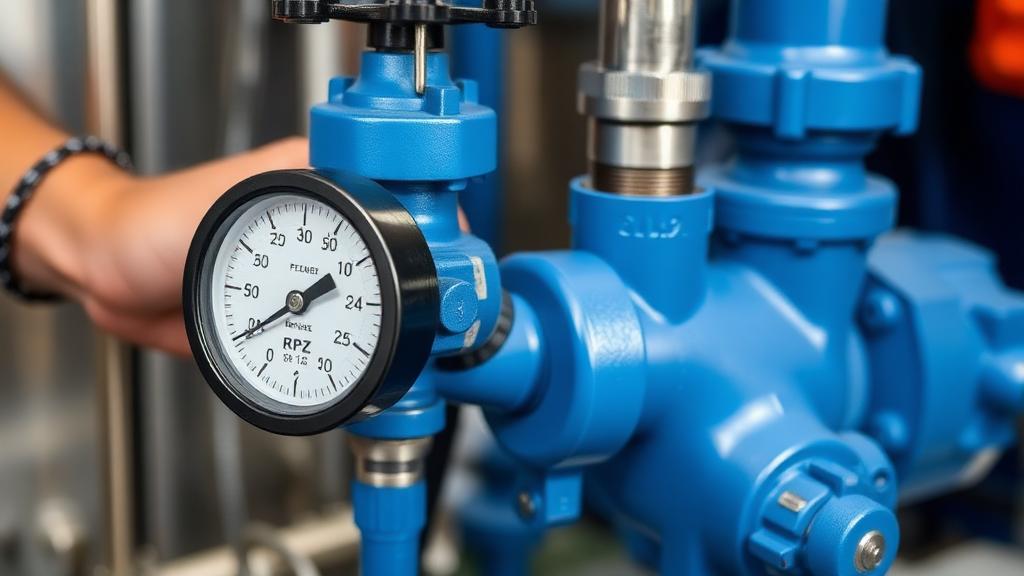
Your differential pressure gauge is the single most important tool in your backflow testing kit. If it's inaccurate, every test result you record is suspect — and a single rejected report can cost you time, money, and credibility. Gauge calibration isn't just a regulatory checkbox; it's the foundation that makes your entire testing operation trustworthy. This comprehensive guide covers requirements by state, calibration procedures, cost management, documentation standards, and daily maintenance practices that keep your gauges accurate between annual certifications.
Why Calibration Matters More Than You Think
Backflow test results live or die on gauge accuracy. A gauge reading 0.3 PSI high could cause you to pass a device that should fail — potentially allowing contaminated water into the potable supply. Conversely, a gauge reading 0.3 PSI low creates false failures that cost your clients unnecessary repairs and erode trust in your testing.
The Real-World Consequences of Inaccurate Gauges
- False passes creating health hazards: An RPZ valve's relief valve must open at a specific differential pressure. If your gauge reads high, you might certify a device that won't actually protect against backflow — creating a genuine public health risk.
- False failures costing clients money: A device that actually passes at 2.1 PSID but reads 1.8 on your uncalibrated gauge triggers an unnecessary repair recommendation. The client pays $300–$800 for a repair that wasn't needed.
- Rejected test reports requiring re-testing: Some water utilities cross-reference results with known device performance ranges. Results outside expected parameters can trigger an audit of your gauge calibration records.
- Loss of certification: Repeated testing with uncalibrated equipment can result in suspension or revocation of your backflow testing certification.
- Legal liability for contamination events: If a contamination incident is traced to a device you recently tested and your gauge calibration was expired, you face significant legal exposure. Your insurance may even deny coverage.
How Gauges Drift Over Time
All mechanical gauges experience drift — a gradual change in accuracy caused by normal use, temperature variations, vibration, and the elastic properties of the Bourdon tube mechanism. Digital gauges also drift, though typically at a slower rate. Studies show that professional-grade backflow test gauges typically drift 0.1–0.3 PSI per year under normal field conditions. Gauges subjected to drops, extreme temperatures, or heavy use may drift significantly more.
Calibration Requirements by Jurisdiction
Requirements vary significantly across states, and some jurisdictions have requirements that go beyond the standard annual calibration.
Standard Requirements (Most Jurisdictions)
| Requirement | Standard | Notes |
|---|---|---|
| Calibration Frequency | Annual (every 12 months) | Some jurisdictions require semi-annual |
| Accuracy Standard | ±0.2 PSI across testing range | Stricter than ±0.5 in most areas |
| Traceability | NIST-traceable reference standards | Non-negotiable everywhere |
| Documentation | Certificate with as-found/as-left readings | Must be available for field inspection |
| Test Points | Minimum 3 points across range | Typically 0, 5, 10, and 15 PSI |
State-Specific Variations
Texas (TCEQ): Texas requires annual calibration with documentation available on-site during testing. TCEQ Rule 344.50 specifies that gauges must be accurate to within ±0.2 PSI. Calibration certificates must include the gauge serial number, calibration date, next due date, as-found readings, as-left readings, and the calibrating laboratory's information.
California: California requires calibration by an NIST-traceable laboratory. Some California water utilities require calibration certificates to be submitted along with test reports — not just available on request.
Florida: Florida follows ASSE 5000 series standards and requires annual calibration. Some Florida counties have additional requirements beyond the state standard.
Colorado: Colorado's Cross-Connection Control program requires annual gauge calibration per AWWA M14 manual standards with as-found and as-left readings at a minimum of three test points.
Illinois: Illinois requires annual calibration and the certificate must accompany the tester at all times during testing. Chicago has additional requirements through the Department of Water Management.
Understanding the Calibration Process
Knowing what happens during professional calibration helps you evaluate lab quality and understand your reports.
Step-by-Step Calibration Procedure
- Visual inspection: The lab examines the gauge for physical damage, corrosion, or contamination
- As-found readings: The gauge is tested against reference standards at multiple points to document its current accuracy — before any adjustments
- Adjustment (if needed): If readings fall outside tolerance, the technician adjusts the gauge mechanism
- As-left readings: After adjustment, the gauge is re-tested at all points to verify accuracy
- Hysteresis check: The gauge is tested ascending and descending to ensure consistent readings
- Certificate generation: A formal certificate is produced documenting all readings and reference standards
What a Good Calibration Certificate Contains
- Gauge manufacturer, model, and serial number
- Calibration date and next due date
- As-found readings at each test point (before adjustment)
- As-left readings at each test point (after adjustment)
- Reference standard identification and NIST traceability chain
- Laboratory name, address, and accreditation details
- Technician name and signature
- Statement of measurement uncertainty
- Pass/fail determination based on applicable tolerance
Finding and Evaluating Calibration Services
Not all calibration services are equal. Choosing the right lab affects both quality and acceptance of your certificates.
Calibration Service Options
| Service Type | Typical Cost | Turnaround | Best For |
|---|---|---|---|
| Manufacturer service centers | $100–$175 | 2–4 weeks | Warranty-covered equipment |
| Local calibration labs | $75–$150 | 3–7 days | Fastest turnaround |
| Plumbing supply houses | $60–$120 | Same day–1 week | Convenience |
| Mobile calibration services | $100–$200 | Same day | Multiple gauges, no downtime |
| Test equipment distributors | $80–$140 | 1–2 weeks | Combined with purchase |
What to Look for in a Calibration Lab
- ISO 17025 accreditation: Gold standard for calibration laboratories
- NIST traceability: Non-negotiable. Reference standards must trace to NIST through an unbroken chain.
- Proper certificates: As-found AND as-left readings are essential. Some budget labs only provide as-left readings.
- Reasonable turnaround: A lab that takes 4+ weeks puts you in a bind. Identify a backup lab.
- Rush service availability: When your gauge fails mid-season, you need same-day or next-day service.
Between-Calibration Maintenance
Professional calibration happens once a year, but accuracy can be compromised at any time. Daily and weekly maintenance practices separate professional testers from amateurs.
Daily Field Practices
- Zero check before every test day: With no pressure applied, your gauge should read exactly 0.0 PSI. If it reads 0.1 or higher, investigate before testing.
- Cross-reference check: If you carry two gauges, compare readings periodically. Divergence over 0.2 PSI means one needs calibration.
- Visual inspection: Check for moisture under the lens, hose kinks or cracks, and secure connections.
- Temperature awareness: Avoid leaving gauges in hot truck cabs (can exceed 150°F) or freezing conditions. Allow acclimation before testing.
Weekly Maintenance
- Inspect all hoses for cracks, stiffness, or deterioration at connection points
- Check bleed valve operation — sticky valves can cause pressure buildup
- Clean gauge face and connections
- Verify carrying case is dry and debris-free
When to Replace vs. Recalibrate
Not every gauge problem is solved by calibration. Sometimes replacement is more cost-effective and safer.
Replace Your Gauge When:
- It has been dropped from significant height
- The calibration lab reports it cannot be adjusted within tolerance
- As-found readings show drift exceeding 1.0 PSI
- The gauge is more than 10 years old with increasing drift
- Physical damage is visible — cracked lens, bent stem, corroded fittings
- Hysteresis exceeds 0.3 PSI
Recalibrate When:
- Drift is within 0.5 PSI (normal wear)
- No physical damage is present
- The gauge is within expected service life
- As-found readings are consistent across all test points
Cost Management Strategies
- Schedule during slow seasons: Avoid rush fees by calibrating in off-peak months (December–February for most testers)
- Own a backup gauge: A second gauge ($400–$800) ensures you're never out of commission while your primary is at the lab
- Negotiate multi-gauge discounts: Most labs offer 10–20% discounts for multiple instruments
- Track as a business expense: Gauge calibration is 100% tax-deductible
Proper documentation is part of running a professional operation. See our essential tools guide for more on building your toolkit, and our business growth guide for professionalism tips.
Conclusion
Gauge calibration isn't just a regulatory checkbox — it's the foundation of trustworthy backflow testing. Every test result you report depends on your gauge's accuracy, and every client's trust depends on your commitment to maintaining that accuracy. Invest in proper calibration schedules, choose reputable NIST-traceable labs, maintain meticulous records, and develop daily verification habits.
Frequently Asked Questions
How much does gauge calibration cost?
Standard calibration typically costs $75–$150 per gauge depending on laboratory, location, and turnaround time. Rush services add $50–$100. Mobile calibration services charge $100–$200 per gauge. Budget $150–$400 annually per gauge for calibration including potential rush services.
What happens if my gauge fails calibration?
If a gauge is out of tolerance, the lab will attempt to adjust it. If adjustment isn't possible, the gauge must be replaced. More critically, any tests performed since the last passing calibration may need to be re-done if as-found readings show significant drift. This is why regular zero-checks between calibrations are so important.
Can I calibrate my own gauge?
Self-calibration is not accepted by water utilities. Calibration must be performed by a laboratory with NIST-traceable reference standards. However, daily zero-checks and periodic cross-reference checks against a known-accurate gauge are things every tester should do between professional calibrations.
How often should I really calibrate — annually or more often?
Annual calibration is the regulatory minimum. If your gauge sees heavy use (5+ tests per day), is frequently transported in rough conditions, or operates in extreme temperatures, consider semi-annual calibration. The cost of an extra calibration ($75–$150) is trivial compared to rejected test reports or liability from inaccurate results.
Do digital gauges need calibration too?
Yes. Digital gauges use pressure transducers that drift over time just like mechanical Bourdon tube gauges, though typically slower. They must be calibrated on the same schedule — annually at minimum. Some digital gauges offer a "zero reset" function — this is NOT a substitute for professional calibration.