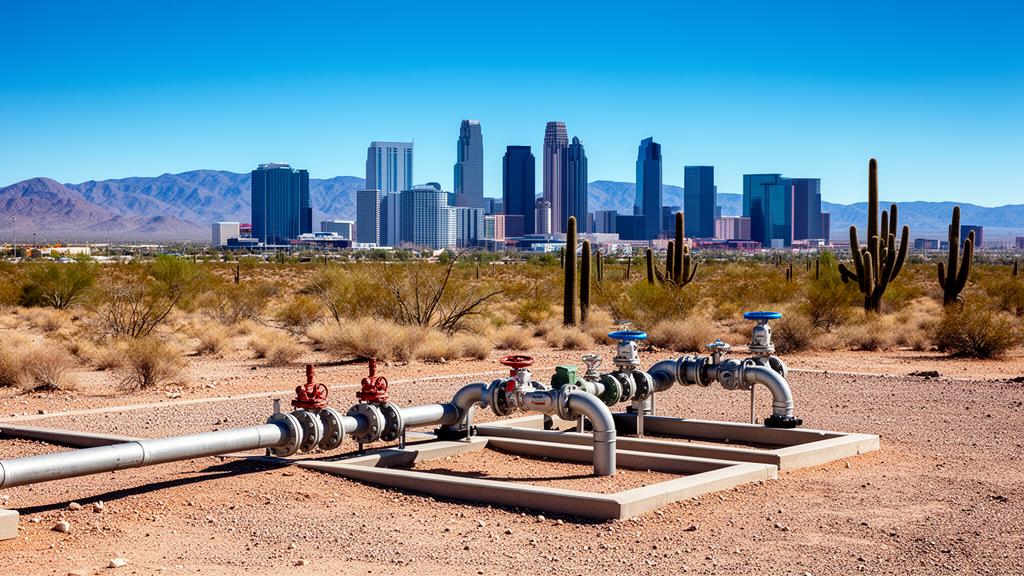
Arizona's rapid population growth and extreme desert climate make backflow prevention both critically important and uniquely challenging. The Phoenix metro area — including Scottsdale, Mesa, Tempe, Chandler, and Gilbert — has some of the most active cross-connection control programs in the Southwest. If you're testing in the Valley of the Sun, here's what you need to know.
Arizona State Requirements
Arizona regulates backflow prevention through the Arizona Department of Environmental Quality (ADEQ) and delegates enforcement to local water utilities.
State-Level Standards
- Testing frequency: Annual testing required for all testable backflow prevention assemblies
- Tester certification: Must hold a valid certification from an ADEQ-approved program (ABPA, ASSE, or university-based programs are generally accepted)
- Gauge calibration: Annual calibration required with NIST-traceable documentation
- Report submission: Within 10 business days of testing (most cities enforce stricter deadlines)
Arizona vs Other States
Arizona is relatively tester-friendly compared to states like California or Texas. There's no state-level licensing exam — certification through national programs is accepted. However, individual cities may have additional registration requirements for testers working in their jurisdiction.
Phoenix Metro City Requirements
The Phoenix metro area spans dozens of municipalities, each with their own cross-connection control program. Here are the major ones.
City of Phoenix
- Program: Phoenix Water Services Cross-Connection Control
- Submission: Online portal (preferred) or email to cross-connection control department
- Deadline: Reports due within 10 days of test
- Registration: Testers must register with Phoenix Water before submitting reports
- Enforcement: Active enforcement — non-compliant properties receive notice and face water shutoff after 60 days
Scottsdale
- Program: Scottsdale Water Resources
- Submission: Email or online submission
- Deadline: 10 business days from test date
- Notable: Scottsdale has a high concentration of luxury resorts, golf courses, and HOA-managed properties — all with significant irrigation backflow needs
Mesa, Tempe, and Chandler
- Mesa: Mesa Water cross-connection program, online portal submission, active enforcement with penalty escalation
- Tempe: Tempe Water Utilities, email submission, strong compliance tracking
- Chandler: Chandler Water Services, online portal, tester registration required
Tucson
- Program: Tucson Water Cross-Connection Control
- Submission: Online portal
- Notable: Tucson's reclaimed water system creates additional cross-connection concerns. Properties using reclaimed water for irrigation must have premises isolation RPZ devices tested annually
Desert Climate Challenges
Arizona's extreme heat creates testing conditions you won't encounter anywhere else in the country.
Heat and Equipment
- Valve box temperatures: Metal valve boxes in direct sun regularly exceed 150°F in summer. Use gloves and let the box cool briefly before reaching inside
- Gauge accuracy: Store test kits in an air-conditioned cab, never in the truck bed. Dashboard temperatures can exceed 180°F and damage gauge internals
- Rubber degradation: Hoses, washers, and o-rings degrade faster in Arizona heat. Replace hose washers monthly during summer and inspect hoses for cracking regularly
- Water temperature: Water sitting in exposed pipes can reach 140°F+ in summer. Test cock discharge during initial flush can scald — use caution and wear gloves
UV Exposure on Devices
Outdoor-installed backflow devices in Arizona take tremendous UV punishment. Plastic components (PVB bonnets, AVB bodies) become brittle after 3–5 years of sun exposure. Recommend UV-protective covers or enclosures to clients — it extends device lifespan significantly and reduces your failure rate on tests.
Irrigation Season Considerations
Arizona irrigation runs year-round (unlike states with winter shutdowns), which means:
- No seasonal winterization or spring startup — testing can happen any month
- Irrigation systems run frequently, keeping devices exercised (reduces stuck-valve failures)
- However, constant use combined with heat accelerates wear on check valve rubber and springs
- Desert landscaping with drip irrigation has lower backpressure risk than turf spray systems
Building a Book of Business in Arizona
Arizona's growth creates strong demand for backflow testers, but the market is also competitive in the Phoenix metro.
High-Demand Client Segments
- HOA communities: Master-planned communities with shared irrigation systems — often 50–200+ devices per community
- Golf courses and resorts: Large-scale irrigation with multiple RPZ assemblies, plus commercial kitchen and pool connections
- New construction: Arizona leads the nation in new housing starts. Every new commercial building and most new subdivisions require backflow devices at certificate of occupancy
- Schools and government: Public facilities with reliable annual testing budgets and multi-year contracts
Seasonal Strategy
Unlike northern states, Arizona doesn't have a "testing season." Spread your workload year-round, but be aware that July–September (monsoon season) brings flash flooding that can submerge valve boxes and require emergency retesting.
For more on handling flood-affected devices, see our guide on extreme weather testing protocols.
Conclusion
Arizona offers strong, year-round demand for backflow testers willing to work in challenging heat conditions. The key to thriving in this market is understanding city-specific requirements, protecting your equipment from extreme temperatures, and positioning yourself as a reliable compliance partner for the property managers and HOAs driving the Valley's growth.
Frequently Asked Questions
Do I need a separate license to test in each Arizona city?
Not a separate license, but many cities require tester registration. This is typically free and involves submitting your certification credentials and insurance documentation. Register with each city's cross-connection control department before submitting reports.
What's the best time of year to test in Arizona?
October through April offers the most comfortable working conditions. Summer testing is viable with proper heat safety precautions, but schedule outdoor tests for early morning (before 10 AM) during June through September.
How does Arizona's reclaimed water affect backflow requirements?
Properties using reclaimed (purple pipe) water for irrigation must have premises isolation — typically an RPZ on the potable water service. This is in addition to any backflow devices on the reclaimed water system itself. Tucson and some Phoenix-area utilities have specific reclaimed water cross-connection requirements.