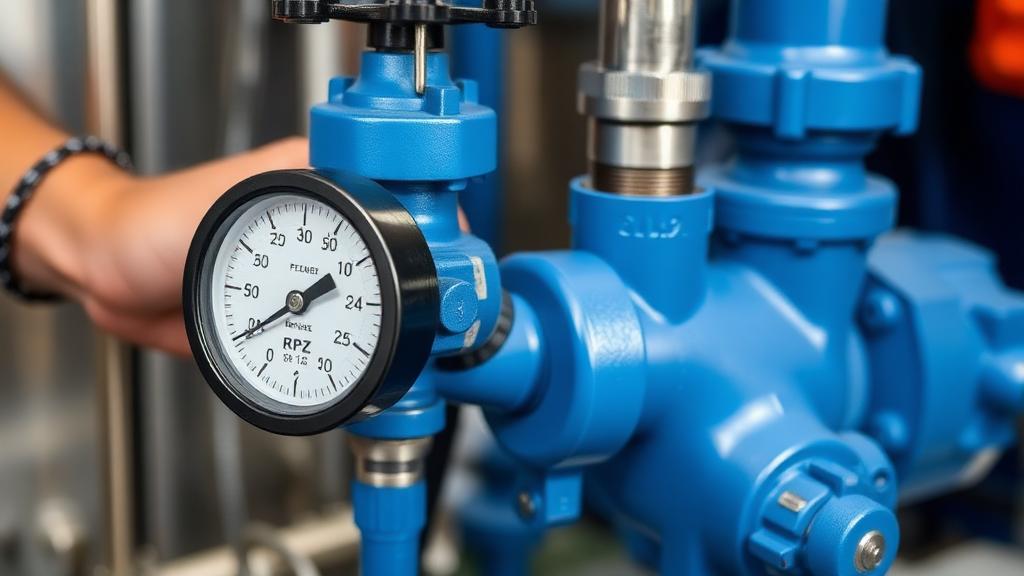
A backflow preventer is only as good as its installation. Poor placement, incorrect orientation, or lack of accessibility turns annual testing into a nightmare and can lead to device failure, code violations, and costly reinstallation. Whether you're installing devices or inheriting someone else's work for testing, understanding installation best practices is essential.
Pre-Installation Planning
Thorough planning prevents costly mistakes and ensures long-term compliance.
Planning Checklist
- Verify the correct device type for the identified hazard level
- Confirm local code requirements for device type, size, and placement
- Plan for accessible test port locations with adequate working space
- Consider future maintenance needs and technician access
- Ensure proper drainage provisions, especially for RPZ devices
Location Requirements
Proper placement is critical for both device function and compliance.
Placement Standards
- PVBs must be 12" above the highest downstream point — no exceptions
- RPZs need proper drainage for relief valve discharge (can be substantial)
- All devices need accessible test ports with 24–36" clear working space
- Protect from physical damage (vehicle traffic, lawn equipment)
- Protect from freezing with enclosures, heat tape, or indoor installation
Common Installation Mistakes
These frequent errors create testing difficulties and compliance issues.
Mistakes to Avoid
- Too close to walls: Installing device within 12" of walls or obstructions makes testing impossible
- Insufficient RPZ drainage: RPZ relief valves can discharge several gallons per minute — plan for it
- PVB too low: Installing PVB at or below the highest sprinkler head defeats its purpose
- Wrong device for hazard: Using a DCVA where an RPZ is required creates a code violation
- Blocked test cocks: Insulation, enclosures, or landscaping that prevents test hose connection
- No isolation valves: Without upstream and downstream shutoffs, testing requires shutting off the entire water supply
Testability Considerations
Install with the annual testing process in mind — a tester will visit this device every year for its entire lifespan.
Tester-Friendly Installation
- Leave room for test hose connections on all test cocks
- Ensure visibility of serial number plate for documentation
- Provide adequate lighting or electrical outlet nearby for dark locations
- Consider seasonal access — will snow, vegetation, or fencing block access?
- Orient test cocks to face the working area, not the wall
Documentation
Proper post-installation documentation ensures smooth annual testing and compliance tracking.
Installation Records
- Record device make, model, serial number, and size
- Document installation location with photos and site description
- Schedule initial testing immediately after installation
- Register the device with the local water authority
- Provide the property owner with a compliance calendar
Proper installation makes annual testing easier and faster. Learn about annual testing requirements.
Conclusion
Good installation practices save time and money for everyone involved — the installer, the tester, and the property owner. Whether you're installing devices or evaluating existing installations during testing, understanding these best practices ensures long-term compliance and device reliability.
Frequently Asked Questions
Can a backflow device be installed vertically?
Some devices are rated for vertical installation, but most must be installed horizontally. Always check the manufacturer's specifications. Installing a horizontal-only device vertically can affect its performance and may void the warranty. City codes may also restrict vertical installations.
How far from the water meter should a backflow device be installed?
Most municipalities require the device to be installed within 5 feet downstream of the water meter or property line. The minimum distance is typically 12 inches. Check local requirements as they vary — some cities have specific distance requirements for their jurisdiction.
What happens if an existing installation doesn't meet code?
If you discover a non-compliant installation during testing, document it and notify the property owner. Depending on the violation, the water utility may require correction before accepting future test reports. Common issues like insufficient clearance or missing isolation valves may be grandfathered in some jurisdictions.