Hospitals, clinics, dental offices, and laboratories present some of the highest backflow hazards in any municipality's cross-connection control program. From surgical suction systems to laboratory chemical lines, healthcare facilities contain dozens of potential contamination points that demand rigorous prevention and testing protocols.
Why Healthcare Facilities Are High-Hazard
Medical facilities use water in ways that create severe contamination risks. Autoclaves, dialysis machines, laboratory sinks, morgue equipment, and chemical dispensing systems all connect to the potable water supply. A single backflow event could introduce biohazardous materials, pharmaceutical chemicals, or infectious agents into drinking water — endangering patients, staff, and the surrounding community.
Common Cross-Connection Points
Key areas requiring backflow protection include:
- Surgical suction and aspiration systems — connected directly to vacuum and drainage
- Dialysis units — chemical treatment solutions near water supply lines
- Laboratory sinks — chemical and biological waste potential
- Dental operatories — handpiece water lines and amalgam traps
- Boiler and chiller systems — chemical treatment loops
- Morgue and autopsy suites — biohazard contamination risk
Device Requirements for Healthcare
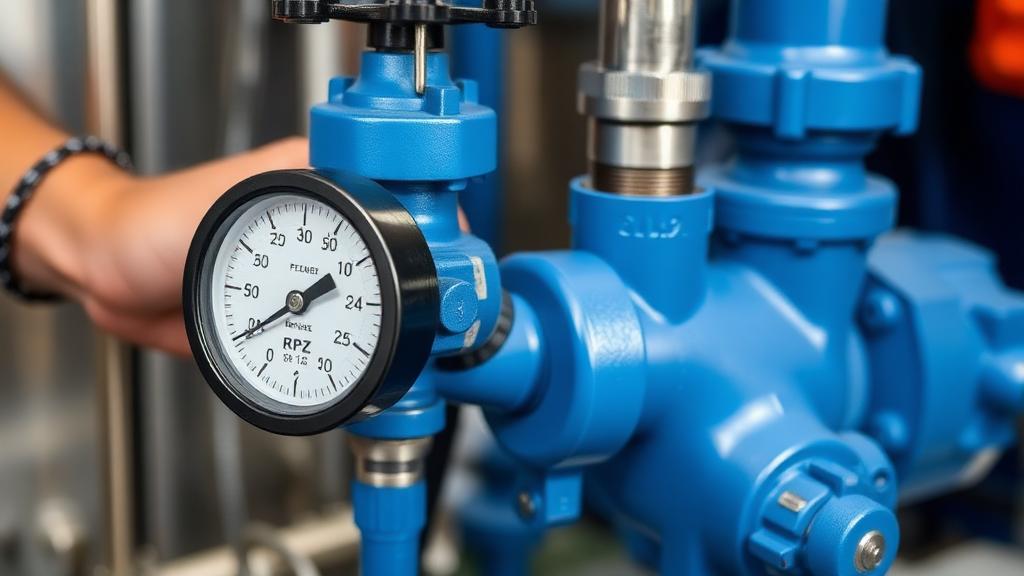
Most healthcare cross-connections require RPZ (Reduced Pressure Zone) assemblies due to the high-hazard classification. Some jurisdictions require air gaps for the most critical connections, particularly in laboratories handling infectious materials. Double check valves are generally insufficient for healthcare applications.
Device Sizing and Placement
Healthcare facilities often have complex plumbing with multiple risers and branches. Each high-hazard connection typically requires its own dedicated backflow preventer, sized appropriately for the flow demand. Main building protection at the meter is required in addition to individual point-of-use devices.
Testing Schedule and Coordination
Annual testing is mandatory, but scheduling in a healthcare environment requires careful coordination. Testing must be planned around patient care schedules, surgical calendars, and facility operations. Many hospitals prefer overnight or weekend testing to minimize disruptions to critical services.
Documentation Requirements
Healthcare facilities must maintain detailed records of all backflow devices, test results, repairs, and replacements. Many states require facilities to submit test reports to both the local water utility and the state health department. Accreditation organizations like The Joint Commission may also review backflow compliance during facility audits.
Working with Facility Management
Successful testing in healthcare settings requires building relationships with facility managers and biomedical engineering teams. Understanding the facility's infection control protocols, restricted areas, and emergency procedures is essential before beginning any testing work.
For tips on managing commercial client relationships, see our guide on commercial vs residential testing.
Conclusion
Medical facility backflow testing demands specialized knowledge, careful scheduling, and thorough documentation. Testers who develop expertise in healthcare compliance can command premium rates and build lasting relationships with facility management teams.
Frequently Asked Questions
Do dental offices need backflow prevention?
Yes. Dental offices are classified as high-hazard due to handpiece waterlines, amalgam separators, and chemical solutions. Most jurisdictions require RPZ protection at the meter and additional point-of-use devices on dental equipment connections.
Can I test backflow devices during hospital operating hours?
It depends on the facility and device location. Critical areas like operating rooms and ICUs typically require off-hours testing. Devices in administrative or outpatient areas may be testable during normal hours with proper coordination with facility management.
What certifications do I need for healthcare facility testing?
Standard backflow tester certification is the minimum requirement. However, many healthcare systems prefer or require testers with additional training in healthcare-specific cross-connection control. OSHA bloodborne pathogen training may also be required for work in certain areas.