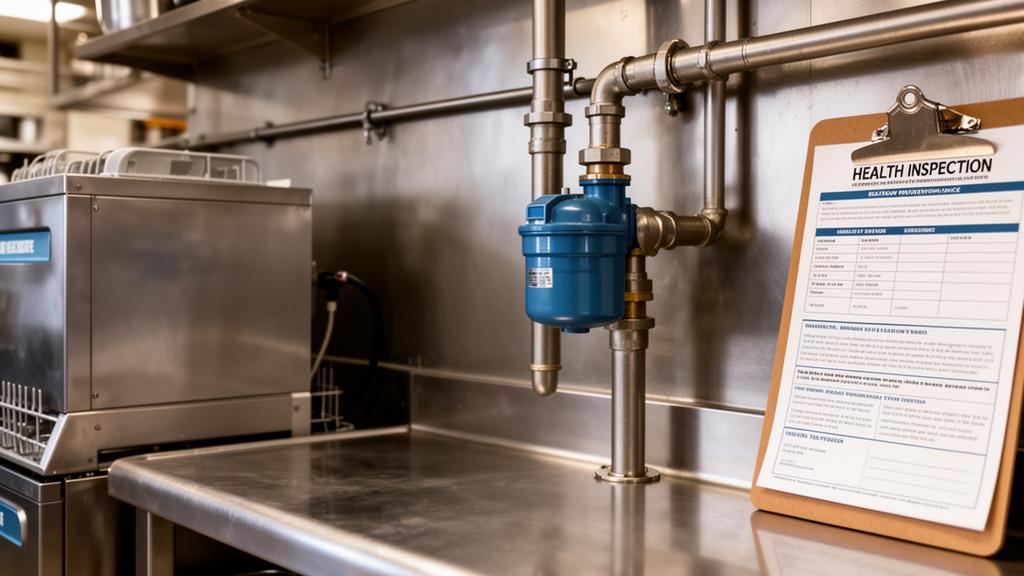
Restaurants and food service operations present some of the highest-risk cross-connection scenarios in any commercial building. Between commercial dishwashers running at 180°F, carbonated beverage systems with pressurized CO2, and grease interceptors connected to the sewer — a single backflow event could contaminate drinking water with chemicals, sewage, or biological hazards. That's why health departments and water utilities pay special attention to food service backflow compliance.
Why Restaurants Are High-Risk
Food service operations create multiple cross-connection hazards that residential and typical commercial buildings don't have.
Common Restaurant Cross-Connections
- Commercial dishwashers: Chemical sanitizers and 180°F water under pressure from booster pumps create backpressure risk
- Carbonated beverage systems: CO2 pressurized lines connected to water supply for soda fountains — carbonated water can backflow into the potable supply
- Grease interceptors: Direct connection between the sewer system and building plumbing through grease traps
- Spray hoses and pre-rinse stations: Hose-end connections submerged in sinks full of food waste during use
- Ice machines: Connected to water supply with potential for backflow through fill valves
- Fire suppression systems: Wet chemical hood suppression systems connected to water lines
Health Department vs Water Utility Requirements
Restaurant owners often face overlapping requirements from multiple agencies — and the requirements don't always align perfectly.
Health Department Standards
Most health departments follow FDA Food Code guidelines, which require air gaps or approved backflow devices on all potable water connections in food preparation areas. Health inspectors check for:
- Proper air gaps at sinks, dishwashers, and ice machine drains
- Backflow devices on carbonation system water supply lines
- No direct cross-connections between potable and non-potable systems
- Hose bibb vacuum breakers on outdoor faucets used for cleaning
Water Utility Requirements
Utilities typically require a premises-level backflow device (usually an RPZ) at the water meter, plus additional point-of-use protection at specific high-hazard connections. Annual testing of all devices is standard.
Required Devices by Connection Type
Different restaurant connections require different levels of protection. Here's a practical reference.
High-Hazard Connections (RPZ Required)
- Main service connection (premises isolation) — RPZ assembly
- Carbonated beverage machines — RPZ or dedicated air gap
- Commercial dishwashers with chemical injection — RPZ
- Any connection to fire suppression chemical systems — RPZ
Medium-Hazard Connections (DCVA or Vacuum Breaker)
- Ice machines — atmospheric vacuum breaker (AVB) at minimum
- Coffee/espresso machines — check valve or inline backflow device
- Hose connections — hose bibb vacuum breaker on each faucet
- Lawn irrigation tied to the same service — PVB or SVB depending on installation
Testing Considerations for Food Service
Testing backflow devices in restaurants requires coordination and awareness of operational constraints that don't exist in other commercial settings.
Scheduling Best Practices
- Schedule during off-hours: RPZ testing requires shutting off water to the device. Schedule before the restaurant opens or after close — never during service
- Coordinate with management: Kitchen staff needs advance notice. Water shutoff affects dishwashers, prep sinks, ice machines, and restrooms
- Plan for drain testing: RPZ devices discharge water during testing. In food prep areas, ensure discharge doesn't contaminate food surfaces
- Multi-device efficiency: Restaurants often have 3–5+ devices. Test them all in one visit to minimize disruption
Common Issues in Restaurant Installations
Restaurant environments are hard on backflow devices. Grease, heat, moisture, and chemical exposure accelerate wear.
- Relief valves fouled by grease aerosol in kitchen environments
- Check valve rubber degraded by exposure to hot, humid conditions
- Test cocks corroded or painted over during kitchen renovations
- Devices installed in inaccessible locations behind equipment or above ceiling tiles
Working with Restaurant Owners
Restaurant owners are busy and often unfamiliar with backflow requirements. Position yourself as a compliance partner, not just a tester.
Building Long-Term Relationships
- Provide a simple one-page compliance summary after each visit
- Send reminders 30 days before annual tests are due — restaurant managers juggle hundreds of deadlines
- Offer to coordinate with their health department inspector if needed
- Create a multi-location pricing package for restaurant chains and franchise owners
For more on building client relationships, see our guide on customer retention strategies.
Conclusion
Restaurant backflow testing is a high-value niche. The complexity of food service cross-connections means more devices per location, and the compliance stakes are higher because health department and water utility requirements overlap. Testers who specialize in food service can build a reliable, recurring book of business with clients who value expertise and minimal disruption.
Frequently Asked Questions
How many backflow devices does a typical restaurant have?
A full-service restaurant typically has 3–6 backflow devices: one at the premises connection (RPZ), one on the carbonation system, one on the commercial dishwasher, and individual vacuum breakers on hose connections and ice machines. Larger operations with multiple kitchens or bars may have 8–12+.
Can a restaurant fail a health inspection for backflow issues?
Yes. Missing or non-functional backflow devices on carbonation systems, dishwashers, or sink connections are health code violations. Depending on the jurisdiction, this can result in points against the restaurant's health score, required corrective action, or in severe cases, temporary closure orders.
Do I need special certification to test restaurant backflow devices?
No special certification beyond your standard backflow tester certification is required. However, familiarity with carbonation system backflow devices (like the Watts Series 9D) and food service plumbing configurations gives you an advantage over testers who primarily work residential.